Lower School Presentations on Consent

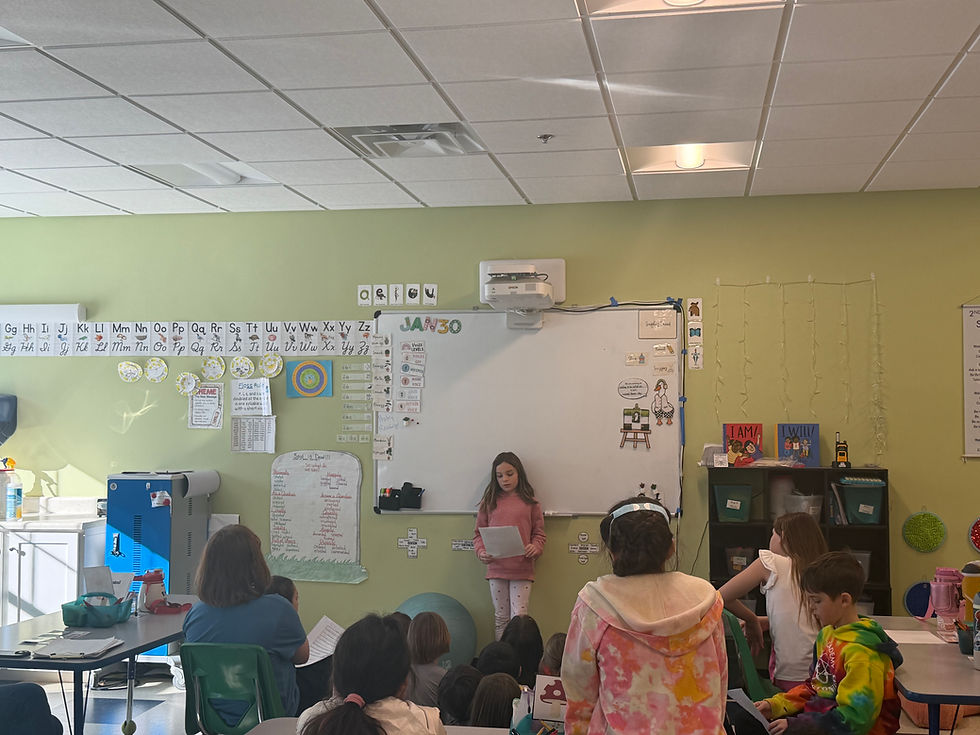
On the 22nd of this month, Mrs. Hill's class created three interactive presentations for the SNA students in EK through 2nd grade. They took their inspiration for their presentations from what they had learned when the Bridges Center for Sexual Assault and Domestic Violence came to speak to them about the importance of consent, healthy relationships, and trusted adults back in December.
The first presentation was on the importance of healthy friendships. The presenting group made sure to ask their audience questions to help them get engaged and to prepare them for the interactive aspect of the presentation. They designed a hands-on activity where they split the students up into pairs, each working with a student from a different grade. They then had to cut out and glue pictures and place them into either a ‘healthy friendship’category or an ‘unhealthy friendship’ category.
The next group gave their presentation on trusted adults. This group prioritized question-and-answer discussions to help define what a trusted adult is. To further reinforce who might be considered a trusted adult, they had everyone circle up and play a matching game. The kids had to determine if the cards they pulled were examples of trusted adults.
The final presentation was on consent. This group also focused on question and answers, providing examples of consent by acting out scenarios to demonstrate examples of consent for the younger students. They made sure the younger kids knew how to ask for consent, how to reject someone asking for something, and how to react if or when someone says “no.” The presenting group had the kids circle up one last time, and they had a student pick a name from a box. They then picked an action from another box. The student who chose a name and action would ask the student whose name they pulled if they could do the said action on the card. If the student said yes, they could do the action. If not, they would react in an appropriate manner to the rejection. Not only did the younger students learn important lessons about trust and consent, but they also had a fun time engaging in the activities.